Cambodia’s Special Economic Zones: 630 Projects Approved in 2025
Why Foreign Investors Are Rushing Into Cambodia’s Industrial Hubs
The Headline That Changes Everything
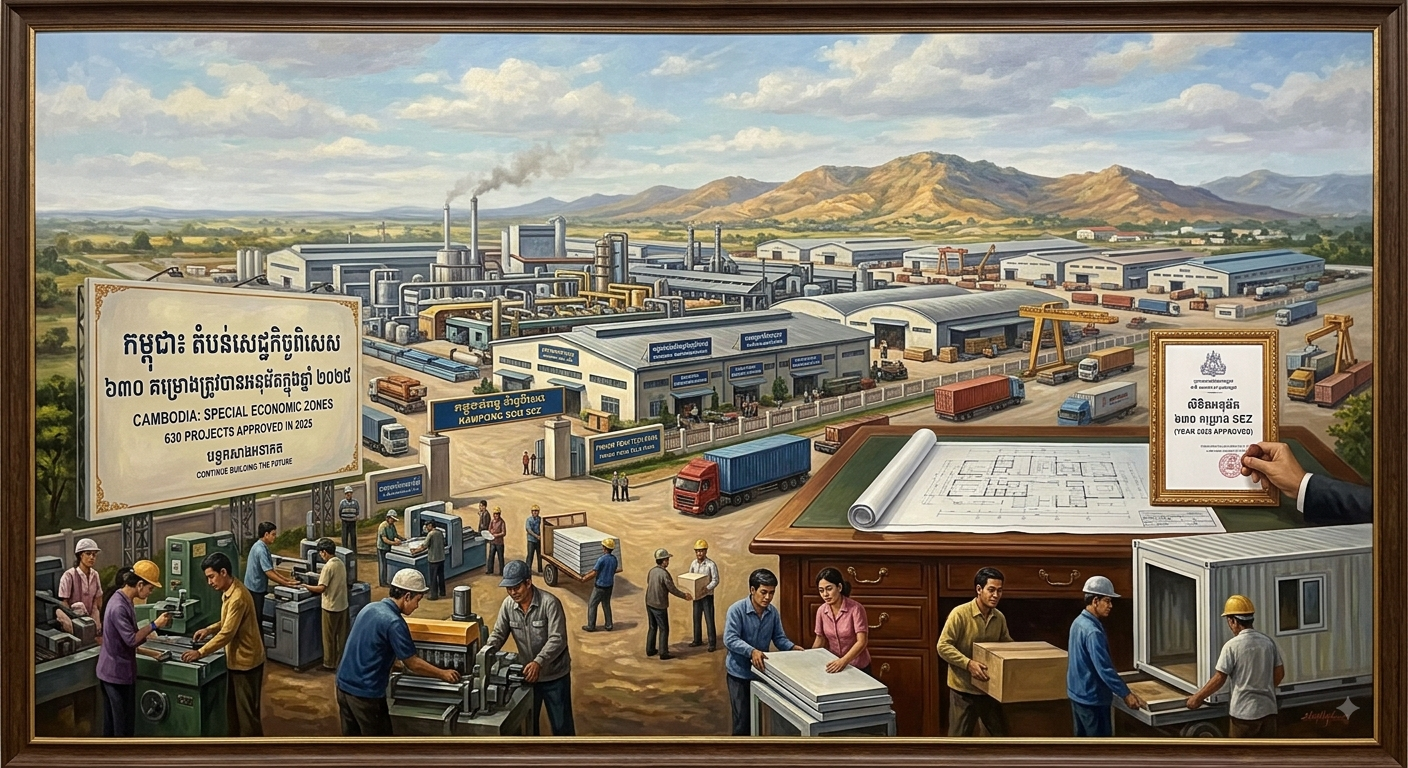
$10 billion. That is the total investment capital Cambodia approves in 2025. The Council for the Development of Cambodia gives the green light to 630 projects in a single year. These projects create 438,000 jobs. This is the strongest year on record for Cambodian investment.
But here is the number that really matters for you as an investor: 243 of those 630 projects land inside Special Economic Zones. Another 387 projects set up outside the zones. This tells you something important. Investment is not just growing. It is spreading across the entire country.
Cambodia now ranks number one in the Asia-Pacific region on the Greenfield FDI Performance Index 2025. It ranks ninth in the world. If you are looking for the next big manufacturing hub in Southeast Asia, the data points straight to Cambodia.
What Is a Special Economic Zone in Cambodia?
A Special Economic Zone, or SEZ, is a designated area with ready infrastructure, streamlined regulations, and tax benefits. Cambodia has 63 approved SEZs and 39 of them are currently in operation. These zones sit in strategic locations near borders, ports, and major cities.
Inside an SEZ, you get access to pre-built factory spaces, reliable utilities, one-stop government services, and fast-track customs clearance. The government designs these zones to make it as easy as possible for foreign companies to set up and start production.
The results speak for themselves. More than 1,062 investment projects now operate across Cambodia’s SEZs. Global manufacturers from China, Japan, Singapore, South Korea, and Europe run factories inside these zones. The sectors range from garments and textiles to electronics, automotive parts, and food processing.
Where Are Cambodia’s Top SEZs?
Location matters in manufacturing. Cambodia’s SEZs sit on major trade routes, and each zone offers distinct advantages. Here is a look at the five most important SEZ locations for investors:
Phnom Penh SEZ
Phnom Penh SEZ is the oldest and most established zone in Cambodia. It employs over 17,000 workers and hosts major international companies. The zone sits just outside the capital city, which means easy access to banks, logistics companies, government offices, and a large labor pool. If you want to be close to decision-makers and professional services, this is the zone.
Sihanoukville SEZ
Sihanoukville is Cambodia’s deep-sea port city. The SEZ here connects directly to international shipping lanes. For businesses that import raw materials and export finished goods, this location cuts shipping time and cost. The zone is popular with heavy manufacturing, steel, and logistics companies. China’s Belt and Road Initiative brings significant infrastructure investment to this area.
Bavet SEZ (Svay Rieng Province)
Bavet sits on the border with Vietnam, right on the Southern Economic Corridor. This makes it a top choice for companies that ship goods to Vietnam and onward to global markets. The Tai Seng Bavet SEZ and Manhattan Bavet SEZ are two of the most active zones. They attract garment manufacturers, electronics assemblers, and agricultural processors.
Poipet SEZ (Banteay Meanchey Province)
Poipet is on the Thailand border. The Royal Group Poipet SEZ sits just eight kilometers east of the city center with direct access to one of the busiest border crossings in Southeast Asia. This zone is ideal for companies that source materials from Thailand or serve the Thai market. Manufacturing, trading, and warehousing companies do well here.
Kandal and Koh Kong SEZs
Kandal province surrounds Phnom Penh, so its SEZs benefit from capital-city infrastructure without capital-city land prices. Koh Kong offers a coastal position near the Thai border. It suits eco-industrial projects, seafood processing, and tourism-related manufacturing. Three new SEZ developments receive approval in early 2026, which shows the government is expanding the network further.
The Tax Incentives That Save You Millions
Cambodia’s 2021 Law on Investment is one of the most competitive in Southeast Asia. When you register as a Qualified Investment Project, or QIP, you unlock a package of incentives that directly impact your bottom line. Here is what you get:
| Incentive | Details |
|---|---|
| Corporate Income Tax Holiday | Up to 9 years of zero percent corporate income tax. The exact duration depends on your sector and investment size. |
| Import Duty Exemption | No import tax on raw materials, machinery, equipment, and construction materials used in your project. |
| VAT Exemption | Zero percent VAT on imports of eligible goods for use in production and export activities. |
| 100% Foreign Ownership | Foreign investors can own 100% of their company. No local partner required. |
| Dividend Tax Exemption | Tax on dividends is exempt during the tax holiday period. |
| Post-Holiday Tax Rate | After the holiday ends, you pay 25% CIT in year one, then the standard 20% rate. |
These incentives are not theoretical. Companies operating inside Cambodia’s SEZs report significant cost savings in their first decade of operation. The combination of tax holidays and duty-free imports means more capital stays inside your business for growth, hiring, and product development.
Why 2025 Is Different From Any Year Before
Cambodia has had SEZs for years. So what makes 2025 different? The answer is scale and diversification.
In the first half of 2025 alone, the CDC approves 373 projects worth approximately $5.8 billion. By the end of the full year, the total reaches 630 projects and $10 billion. In the first four months of 2026, another 187 projects receive approval. The momentum is not slowing down. It is accelerating.
Manufacturing leads the way with $5.6 billion of the total. But the interesting story is what happens beyond garments. Non-garment manufacturing is growing fast. Electronics assembly, automotive components, solar equipment, and agricultural processing are all expanding. Cambodia is moving up the value chain, and investors who enter now position themselves ahead of the curve.
Singaporean investors are a good example. Singapore is one of the most disciplined capital markets in the world. When Singaporean money flows into Cambodia’s SEZs, it signals that sophisticated investors see real, measurable returns. In 2025, Cambodia attracts $5.1 billion in FDI, a 16 percent increase from 2024.
How to Invest in a Cambodia SEZ: A Practical Guide
Getting started is simpler than most investors expect. Here is a clear step-by-step process:
Step 1: Choose your sector. Cambodia offers incentives for 19 priority sectors. These include manufacturing, agriculture processing, technology, assembly, tourism, and logistics. Identify which sector fits your business model and investment goals.
Step 2: Pick your SEZ location. Each zone has different strengths. Phnom Penh for professional services access. Sihanoukville for port logistics. Bavet for Vietnam trade. Poipet for Thailand connectivity. Visit the zones, talk to existing operators, and compare infrastructure quality.
Step 3: Register as a QIP. The CDC now offers an online portal called cdcIPM for Qualified Investment Project applications. You submit your investment proposal, business plan, and financial projections. The CDC reviews and approves projects that meet the criteria. Having a local legal or investment advisory firm helps speed up this process.
Step 4: Set up your company. Cambodia allows 100 percent foreign ownership. You register your company at the Ministry of Commerce, obtain a tax identification number, and open a corporate bank account. The entire process typically takes four to six weeks with professional assistance.
Step 5: Build and operate. Once your QIP status is confirmed, you enjoy the full incentive package. Import your machinery duty-free. Hire workers. Start production. The SEZ administration handles utilities, security, and customs facilitation so you can focus on your business.
The USD Advantage No Other Country Offers
Here is something most investors overlook. Cambodia runs on the US dollar. This is not a pegged currency or a partial arrangement. The dollar is the dominant currency for business transactions, property leases, and government reporting. The Cambodian riel exists alongside the dollar, but for practical business purposes, you operate in USD.
What does this mean for you? It means zero currency risk when you invest from a dollar-based economy. You do not need to hedge against local currency depreciation. You do not lose money on exchange rate fluctuations when you repatriate profits. Your financial projections stay stable because your cost base is in the same currency as your revenue.
Compare this to Vietnam, Thailand, or Indonesia, where currency depreciation can erase 5 to 15 percent of your returns in a single year. In Cambodia, a dollar earned is a dollar kept. The riel actually appreciates by 1.5 percent in 2025, which means the local currency is stable, not a source of risk.
Who Is Already Investing? The Proof Is on the Ground
The best way to evaluate an investment destination is to look at who is already there. Cambodia’s SEZs host a growing list of international manufacturers and brands. Chinese companies account for over 70 percent of manufacturing FDI, with $5.2 billion flowing into the sector in 2025. But the investor base is diversifying.
Japanese automotive parts suppliers operate in Phnom Penh SEZ. Singaporean electronics firms run assembly lines in Sihanoukville. European food processing companies set up in Bavet to access both the Cambodian and Vietnamese markets. South Korean textile manufacturers expand their capacity in multiple zones.
The common thread among these investors is clear. They come for the incentives, stay for the logistics, and grow because of the labor cost advantage. Cambodia’s minimum wage in the garment sector is around $208 per month, which is significantly lower than China, Thailand, or Vietnam. For labor-intensive manufacturing, this cost advantage directly improves your profit margin.
Risks to Understand Before You Invest
Every investment carries risk, and Cambodia is no exception. The smart approach is to understand the risks and plan around them.
Infrastructure gaps. While SEZs have reliable power and water, some areas outside the zones face infrastructure challenges. The solution is simple: operate inside an established SEZ where infrastructure is guaranteed.
Regulatory transparency. Cambodia’s regulatory framework is improving, but some processes still lack full clarity. Work with a reputable local law firm or investment advisory firm. They navigate the system efficiently and keep your compliance clean.
Skilled labor shortage. Cambodia has abundant unskilled and semi-skilled labor. For highly technical roles, you may need to bring in expatriate staff or invest in training programs. Many SEZ operators partner with local vocational schools to build a pipeline of skilled workers.
Geopolitical perception. Some Western investors hesitate due to Cambodia’s close relationship with China. However, the data shows growing diversification. Singaporean, Japanese, European, and American companies all operate successfully in Cambodia’s SEZs. The government actively welcomes investment from all countries.
Why Now Is the Right Time to Act
Timing matters in investment. Cambodia’s SEZ story is at an inflection point. The government approves three new SEZ developments in early 2026. The Funan Techo Canal, a $1.7 billion waterway project, is under construction and targets completion by 2028. This canal will reshape logistics in the Mekong region and give Cambodia a direct shipping route that bypasses Vietnamese ports.
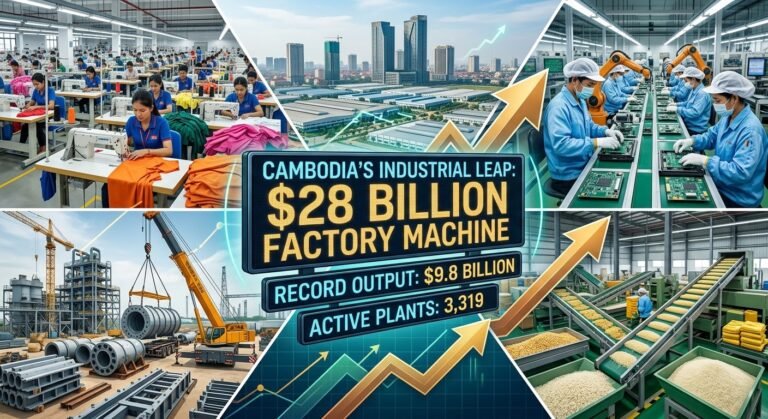
The $28 billion infrastructure investment gap that PwC identifies represents enormous opportunity. Cambodia needs roads, bridges, logistics centers, cold chain facilities, and smart warehouses. The government actively seeks foreign partners to fill this gap. If you are in infrastructure, logistics, or construction, Cambodia is open for business.
Solar power is another emerging opportunity. The government promotes solar energy generation inside SEZs to lower utility costs for investors. Manufacturing and technology companies that need reliable, affordable power find this especially attractive. As the world shifts toward green manufacturing, Cambodia positions itself as a viable alternative to more expensive markets.
The numbers do not lie. A record $10 billion in approved investment. 630 projects in one year. 438,000 new jobs. The number one FDI performance ranking in Asia-Pacific. These are not projections. These are facts from 2025. The question is not whether Cambodia is a good investment destination. The question is whether you will be among the first or the last to arrive.
Your Next Step
If you are serious about investing in Cambodia’s Special Economic Zones, start with research. Visit the CDC website at cib-cdc.gov.kh to explore available SEZ locations and incentive details. Talk to investment advisory firms that specialize in Cambodia. They provide sector-specific guidance, help with QIP registration, and connect you with zone administrators.
Cambodia offers what few countries can: a dollar-based economy, aggressive tax incentives, 100 percent foreign ownership, strategic location, and a government that actively wants your investment. The SEZs are the gateway. The opportunity is real. The time is now.