Cambodia Durian Gold Rush: 5,738 Tonnes, 40x Growth, and a $7.5 Billion Market Waiting
A new rail corridor cuts transit to China from 20 days to 7. 170 farms win Chinese approval. The durian boom is real, and the investment window is open right now.
The Number That Changes Everything: 5,738 Tonnes and 40x Growth
5,738 tonnes. That is the volume of fresh durian Cambodia exports to China in the first seven months of 2026. This figure represents a nearly 40-fold increase over the total volume Cambodia ships to China for all of 2025. This is not a marginal improvement. This is an exponential leap that signals a structural shift in Cambodia’s agricultural export capacity. The infrastructure, the trade agreements, and the market access all align at the same moment, and the result is a surge that commands attention from every serious agricultural investor in Southeast Asia.
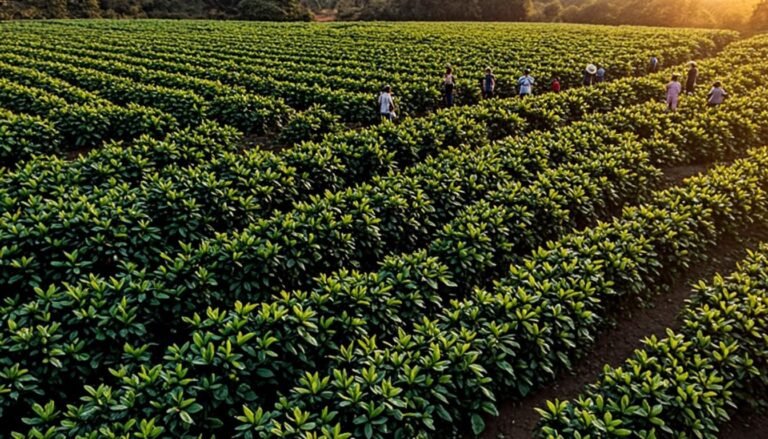
The scale of this growth is even more striking when you consider the baseline. Cambodia’s total durian production stands at approximately 36,656 tonnes per year from 5,289 hectares of plantations, with only 3,403 hectares currently under active harvest. In just seven months, Cambodia channels more than 15 percent of its entire annual production into the Chinese market. Before 2025, this channel barely exists. The acceleration is not just about volume. It is about the creation of an entirely new export supply chain that did not meaningfully exist two years ago.
This kind of growth trajectory is typical of early-stage export commodities that unlock access to the world’s largest consumer market. Thailand’s durian industry follows the same pattern a decade ago. Vietnam replicates it in recent years. Now Cambodia is at the beginning of its own curve, with the critical difference that the rail corridor, the packing infrastructure, and the GACC approvals are all already in place. The foundation is built. The growth phase is now underway.
The $7.5 Billion Question: Why China Cannot Get Enough Durian
To understand Cambodia’s opportunity, you first need to understand the scale of the market on the other side. China’s fresh durian imports reach $7.49 billion in 2025, totaling 1.868 million tonnes. This represents a 7.1 percent increase in value and a 19.7 percent increase in volume over the previous year. In the first half of 2026 alone, China imports 825,000 tonnes of durian, a 47 percent year-on-year surge. The appetite is not slowing down. It is accelerating.
The market is massive, but it is also concentrated. Thailand dominates with $3.79 billion in durian exports to China in the first half of 2026, holding the lion’s share of the market. Vietnam occupies second position with $846 million, capturing roughly 18 percent. Cambodia’s 5,738 tonnes represent a fraction of one percent of China’s total imports. The opportunity is not to replace Thailand or Vietnam. The opportunity is to capture a meaningful share of a market that is growing at nearly 50 percent per year and is worth more than $7 billion annually.
The Laos Rail Corridor: From 20 Days to 7
The single biggest catalyst behind Cambodia’s durian surge is not a farm. It is a railway. On June 22, 2026, Cambodia and Laos inaugurate a new transit corridor that connects Cambodian agricultural exports to the Laos-China Railway, the 1,035-kilometer line that links Vientiane to Kunming. The result is transformative. Cambodian durians now reach China in approximately one week, down from nearly 20 days via the previous routing through Vietnam. For a perishable fruit with a limited shelf life, cutting transit time by 65 percent is the difference between a premium product and an unsellable one.
The agreement covers six priority Cambodian agricultural products: durian, longan, bananas, mangoes, rice, and cassava. Six transit protocols govern the shipment of these goods through Lao territory. This corridor is not a theoretical future project. It is operational today, and the durian export data proves it works. The initial shipment of fresh durian leads the way on the very first day of operations, and the volume data over the following five weeks confirms that the corridor is functioning at commercial scale.
The strategic implication is significant. Phnom Penh explicitly views this route as a way to diversify export corridors and reduce dependence on existing routes through Thailand and Vietnam. For investors, route diversification means supply chain resilience. When you have multiple pathways to market, your investment is not hostage to a single border crossing or a single bilateral relationship. The Laos corridor adds optionality, and optionality reduces risk.
170 Farms, 38 Packing Houses: Cambodia’s Export Infrastructure Takes Shape
Market access means nothing without the infrastructure to deliver compliant, export-quality product. This is where the second critical enabler enters the picture. China’s General Administration of Customs, or GACC, approves 170 Cambodian durian orchards and 38 packing facilities for export to China. Each approved orchard and packing house meets Chinese phytosanitary standards, which are among the most stringent in the world. This approval list is not a formality. It represents years of regulatory engagement, inspection, and quality system development.
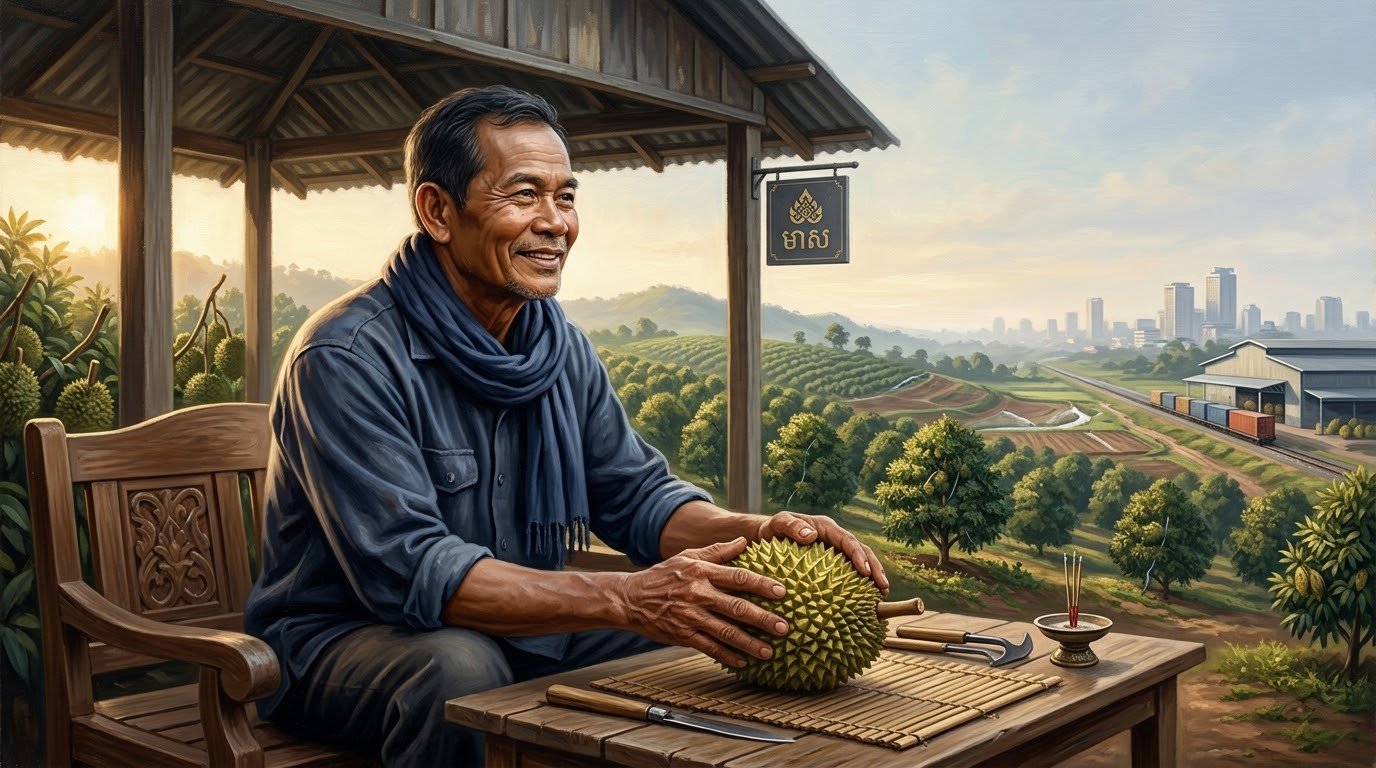
Cambodia’s first dedicated durian packing facility for international export opens in May 2025 in Tbong Khmum Province, operated by HF FRUIT LTD. This facility provides the post-harvest handling, quality sorting, and packaging capabilities that Chinese importers demand. The fact that Cambodia moves from zero export-oriented packing facilities in early 2025 to 38 GACC-approved sites by mid-2026 is a remarkable pace of infrastructure development. Each new packing facility expands the country’s export capacity and creates opportunities for investors who provide cold chain, logistics, and processing equipment.
The challenge now is quality protection. Industry officials and media reports highlight the risk of cross-border product mixing, where Cambodian durians are packed and exported through Vietnamese or Thai facilities, potentially losing their ‘Made in Cambodia’ origin identity. Maintaining brand integrity is essential for Cambodia to command premium pricing and build long-term consumer recognition in the Chinese market. Investors who invest in Cambodian-branded packing and cold chain infrastructure are positioning themselves at the quality end of the value chain.
The Plantation Map: Where Cambodia’s Durian Gold Is Growing
For agricultural investors, location is everything. Cambodia’s durian cultivation is concentrated in specific provinces where soil conditions, climate, and existing agricultural expertise create favorable growing environments. Understanding this geography is the first step in evaluating plantation investment opportunities.
| Region | Hectares | Status | Key Details |
|---|---|---|---|
| Tbong Khmum | 2,500+ (target) | Leading province | 950ha dedicated, first export packing facility, Stung Trang district hub |
| Stung Trang (Tbong Khmum) | 2,000+ | Active expansion | Largest concentration, farmer cooperatives, research-confirmed varieties |
| Ratanakiri / Mondulkiri | Expanding | Frontier zone | Newer plantations, larger land availability, lower costs |
| Other provinces | ~789 | Scattered | Smaller plots, mixed with other crops, development potential |
Tbong Khmum is the undisputed center of Cambodia’s durian industry. Stung Trang district alone accounts for over 2,000 hectares with plans to expand to 2,500 hectares. The province hosts the country’s first export-oriented packing facility and benefits from proximity to Phnom Penh and the rail corridor to Laos. For investors seeking established operations with proven yields and existing infrastructure, Tbong Khmum offers the lowest-risk entry point.
Ratanakiri and Mondulkiri represent the frontier. These northeastern provinces offer larger land parcels at lower cost, and their volcanic soil profiles are well-suited to durian cultivation. The trade-off is infrastructure. Roads, cold chain, and packing facilities are less developed than in Tbong Khmum. For investors with a longer time horizon and higher risk tolerance, the northeastern provinces offer the potential for higher returns through early-stage land acquisition and plantation development.
The Investment Chain: Four Links Where Capital Flows
The durian boom is not a single investment opportunity. It is a value chain with distinct links, each offering different risk-return profiles and requiring different levels of capital and expertise. Understanding where you fit in this chain is the first step in building a durian investment strategy.
Link 1: Plantation Development
Durian is a long-term investment. Trees typically begin bearing fruit four to six years after planting and reach peak production at eight to ten years. The upfront capital requirement for land acquisition, planting, irrigation, and maintenance ranges from $15,000 to $25,000 per hectare depending on location and development level. With farm-gate durian prices in the range of $2.50 to $4.00 per kilogram and yields of 10 to 15 tonnes per hectare at maturity, a well-managed plantation generates $25,000 to $60,000 per hectare in annual revenue. The economics are compelling, but the time horizon is real. Investors who enter now benefit from land prices that are still low relative to Thailand and Vietnam, before the full extent of Cambodia’s export capacity is priced in.
Link 2: Packing and Quality Assurance
GACC approval requires specific infrastructure: grading lines, cleaning stations, temperature-controlled storage, and traceability systems. Cambodia has 38 approved packing facilities today, but industry sources suggest that significantly more capacity is needed to handle projected export volumes. The capital requirement for a modern, GACC-compliant packing facility ranges from $500,000 to $2 million depending on scale and automation level. The revenue model is straightforward: packing fees per kilogram of processed fruit. With 5,738 tonnes exported in seven months and volumes projected to grow 5 to 10 times over the next five years, the demand for packing capacity is substantial and growing.
Link 3: Cold Chain Logistics
Fresh durian requires strict temperature control from packing house to Chinese distribution center. The cold chain is the most underserved link in Cambodia’s durian export supply chain and therefore represents the highest-potential investment opportunity. Cold chain logistics includes refrigerated trucks, cold storage warehouses, and pre-cooling facilities at packing houses. The ASEAN cold chain logistics market is valued at $19.98 billion in 2026, and Cambodia’s share is disproportionately small relative to its agricultural export ambitions. Investors who build cold chain infrastructure in Tbong Khmum and along the Laos rail corridor address a critical bottleneck and earn premium service fees.
Link 4: Cross-Border Trading and Distribution
Not every investor wants to own farms or build facilities. Some investors want to trade. The cross-border trading model involves purchasing durian from approved orchards, managing the export logistics, and selling to Chinese distributors or retail chains. This model requires less capital than plantation development but demands strong relationships on both sides of the border, deep knowledge of Chinese import regulations, and the ability to manage quality control across the supply chain. The margin profile is attractive: the spread between Cambodian farm-gate prices and Chinese wholesale prices is significant, and investors who can reliably move quality product through the supply chain capture that spread.
What It Takes to Compete with Thailand and Vietnam
Cambodia is not entering an empty market. Thailand dominates China’s durian imports with over $3.79 billion in the first half of 2026 alone. Vietnam is rapidly expanding its share, reaching $846 million and an 18 percent market share. Both countries have mature supply chains, established brand recognition, and deep relationships with Chinese buyers. Cambodia’s competitive position is different, and understanding that difference is essential for investors.
| Factor | Thailand | Vietnam | Cambodia |
|---|---|---|---|
| China H1 2026 Export Value | $3.79 billion | $846 million (18% share) | Emerging (under 1%) |
| Export Volume (annual) | ~1.5 million tonnes | ~400,000+ tonnes | ~36,656 tonnes total prod. |
| Plantation Area | ~200,000+ hectares | ~100,000+ hectares | 5,289 hectares |
| Supply Chain Maturity | Fully mature | Rapidly maturing | Early stage |
| China Market Access | Long-established | GACC protocol since 2022 | GACC approvals 2025-2026 |
| Key Advantage | Brand, scale, variety | Proximity, speed, RCEP | Low cost, room to grow |
| Investor Entry Cost | High (land premium) | Medium-high | Low (land available) |
| Growth Trajectory | Mature, steady | Fast growth | Exponential (40x in 1 year) |
Cambodia’s position is not about competing head-to-head with Thailand on volume or brand recognition. It is about capturing share in the fastest-growing segment of a $7.5 billion market that is expanding at nearly 50 percent per year. China’s demand is growing so fast that it creates room for new suppliers. Cambodia’s advantages are real: lower land costs, an available labor force, GACC approvals already in hand, and a brand-new rail corridor that slashes transit times. These are the ingredients of a market entrant that can grow rapidly from a low base.
The experience of Vietnam is instructive. Vietnam’s durian exports to China explode from near zero to nearly $4 billion in just a few years after securing GACC access. Cambodia is at the same inflection point. The question is not whether Cambodia can compete. The question is how fast it scales, and how much of that growth accrues to investors who enter now rather than in three or five years when land prices and valuations are higher.
Risks Every Durian Investor Should Weigh
Agricultural investment carries inherent risks, and durian is no exception. The key is to identify the specific risks in Cambodia’s durian sector and develop strategies to manage them.
Market concentration risk. Cambodia currently exports almost exclusively to China. If Chinese demand softens, or if China restricts imports for phytosanitary or political reasons, the entire export channel faces disruption. The mitigation is to pursue parallel market access in other countries. The European durian market is valued at $8.83 billion in 2025 and is growing. South Korea, Japan, and Singapore are additional high-value markets where Cambodian durian can command premium prices. Diversifying export destinations reduces single-market dependency.
Quality and brand risk. Reports of cross-border product mixing, where Cambodian durians pass through Vietnamese or Thai facilities and lose their origin identity, threaten Cambodia’s ability to build a recognized national brand. The solution is to invest in Cambodian-origin packing and branding, maintain direct supply chain control, and work with industry associations to enforce origin labeling standards. The ‘Made in Cambodia’ brand is an asset that needs active protection.
Climate and yield risk. Durian trees are sensitive to drought, flooding, and temperature fluctuations. Climate change introduces uncertainty into long-term yield projections. The mitigation includes investing in irrigation infrastructure, selecting climate-resilient varieties, and diversifying across multiple geographic zones to spread weather risk.
Regulatory and logistics risk. The Laos transit corridor is new, and operational reliability is still being established. Any disruption to rail services, border procedures, or bilateral agreements impacts export capacity. The mitigation is to maintain relationships with multiple logistics providers and to support the development of alternative routes, including the Funan Techo Canal for future maritime export options.
Investment Playbook: How to Play Cambodia’s Durian Boom
The data paints a clear picture. Cambodia’s durian sector is at the beginning of an export-driven growth curve that mirrors the trajectories of Thailand and Vietnam, with the added advantage of a brand-new logistics corridor and GACC approvals already secured. The question for investors is how to deploy capital effectively across the value chain. Here are four actionable strategies.
Plantation acquisition in Tbong Khmum.For investors with a five-to-ten-year horizon, acquiring or developing durian plantations in Tbong Khmum offers direct exposure to the commodity. Target established farms with GACC-approved orchard status. Land prices are still low relative to Thailand and Vietnam, and the province’s existing infrastructure and labor pool reduce development risk. Budget $15,000 to $25,000 per hectare for land and development.
Packing facility development. For investors seeking faster returns with moderate capital requirements, building GACC-compliant packing facilities addresses a clear capacity gap. With 38 approved sites today and export volumes projected to grow 5 to 10 times, new packing capacity is essential. Budget $500,000 to $2 million per facility. Revenue comes from per-kilogram processing fees, and occupancy rates are high because export demand is outstripping supply.
Cold chain infrastructure on the Laos corridor. For infrastructure investors, cold chain logistics is the highest-impact opportunity. Refrigerated trucks, cold storage, and pre-cooling stations along the Cambodia-Laos-China route address the most critical bottleneck in the supply chain. The ASEAN cold chain market is a $20 billion opportunity, and Cambodia’s share is disproportionately underserved.
Trading and distribution partnerships. For investors who prefer not to own hard assets, cross-border trading offers capital-light exposure. Partner with GACC-approved orchards and packing houses, manage the export logistics, and sell to Chinese distributors. This model generates revenue from margins rather than asset appreciation, and it scales without the capital intensity of plantation or infrastructure investment.
Cambodia’s durian export surge is not a speculative story. It is 5,738 tonnes of verifiable export data, a $7.5 billion Chinese market growing at 47 percent, a new rail corridor that cuts transit time by 65 percent, and 170 GACC-approved farms already shipping product. The infrastructure is in place. The demand is proven. The growth is exponential. The investors who move now, while land is cheap and the market is still forming, are the ones who capture the outsized returns that early movers always enjoy.